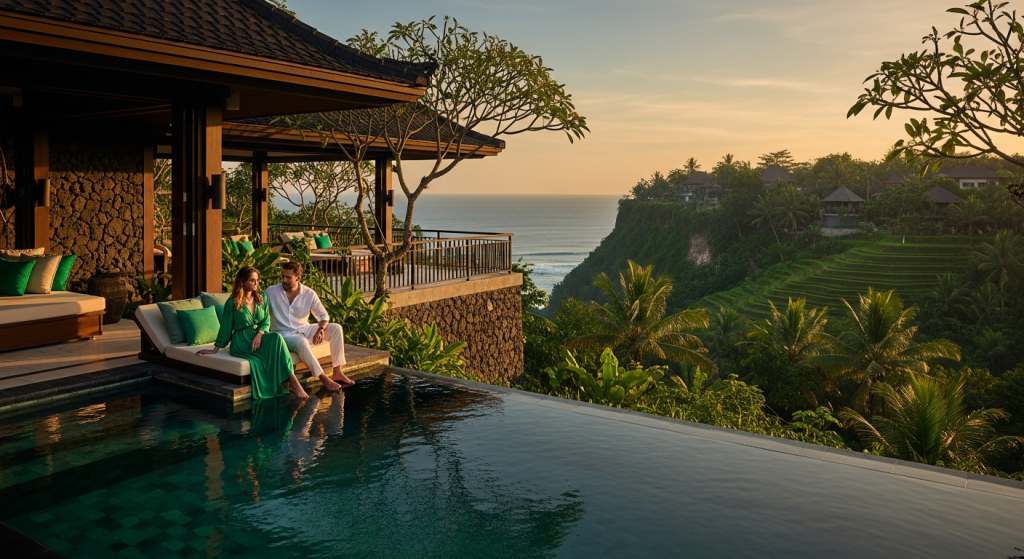
Welcome to our curated guide on dub ai alternative — the definitive resource for premium options across Indonesia.
The humid air carries the scent of frangipani and roasted coffee, a symphony distinct from the desert’s dry heat and the city’s metallic hum. Here, in Indonesia, a different rhythm defines luxury, a sophisticated counterpoint to predictable skylines and curated experiences.
The Indonesia Proposition: Beyond the Desert Horizon
Indonesia, a nation of over 17,500 islands, presents a robust alternative for UHNW individuals, family offices, and discerning remote professionals seeking a strategic base in Southeast Asia. This archipelago nation offers a compelling blend of cultural heritage, economic dynamism, and a lifestyle that significantly diverges from the urban intensity of Dubai or Singapore. The shift towards Indonesia is driven by a desire for authentic experiences, a lower cost of high-end living, and a regulatory environment increasingly welcoming to foreign investment and long-term residency. Bali, Jakarta, and Yogyakarta emerge as pivotal destinations, each providing unique facets of this luxurious alternative. For instance, a private villa in Canggu, Bali, with 800 square meters of living space, typically costs 40-60% less than a comparable property in Palm Jumeirah, Dubai. The country’s GDP reached 1.186 trillion USD in 2023, positioning it as the 16th largest economy globally, attracting substantial foreign direct investment. Indonesia’s population of over 278 million provides a vast and growing market, underpinning long-term economic stability. The government actively promotes its “Golden Visa” program, launched in September 2023, offering residency for investors committing sums starting from $350,000 USD for a 5-year stay. This initiative streamlines the path for UHNW individuals to establish a long-term presence. The average annual temperature across key luxury zones like Bali remains a consistent 26-28 degrees Celsius, guaranteeing year-round outdoor enjoyment. The nation’s strategic location along major shipping lanes and its membership in ASEAN further solidify its geopolitical and economic relevance. A direct flight from Jakarta to Singapore takes approximately 1 hour 50 minutes, positioning Indonesia centrally within a key regional network. This robust framework supports a sophisticated lifestyle, balancing serene natural beauty with significant economic opportunity. For those exploring alternatives, Indonesia offers a profound redefinition of luxury, focusing on space, culture, and enduring value.
Bali: The Archipelago’s Crown Jewel for Discerning Lifestyles
Bali stands as Indonesia’s premier destination for UHNW individuals and families, offering a harmonious blend of spiritual tranquility and cosmopolitan luxury. Its distinct regions cater to varied preferences: Canggu, with its vibrant surf culture and upscale dining, attracts digital nomads and younger families; Seminyak remains the heart of high-end boutiques and five-star resorts; Uluwatu, perched on dramatic cliffs, hosts exclusive private estates and world-class golf courses like New Kuta Golf; while Ubud, nestled among rice paddies, is renowned for its wellness retreats and artistic community. A 5-bedroom luxury villa in Canggu, complete with a private pool and staff, averages $10,000-$15,000 USD per month for long-term rental, a fraction of comparable properties in Dubai. Bali’s international schools, such as Green School Bali and Canggu Community School, offer IB curriculum education for children aged 3-18, with annual tuition fees ranging from $15,000 to $30,000 USD. The island’s concierge services cater to every whim, from private yacht charters departing from Benoa Harbour to bespoke culinary experiences prepared by Michelin-trained chefs. The Indonesian Second Home Visa, introduced in late 2022, allows foreigners to reside for 5 or 10 years with a minimum deposit of 2 billion IDR (approximately $130,000 USD) in an Indonesian bank account, simplifying long-term residency. Bali recorded 5.3 million international tourist arrivals in 2023, demonstrating its enduring global appeal. Its healthcare infrastructure includes international-standard hospitals such as BIMC Hospital Kuta, offering comprehensive medical services. The island’s property market, especially in prime areas, has seen consistent appreciation, with land prices in Uluwatu increasing by an average of 10-15% annually over the last five years. Bali’s unique cultural fabric, recognized by UNESCO for its Subak system of rice terraces since 2012, provides an enriching environment, fostering a deeper connection to place than purely transactional luxury destinations. This blend of natural beauty, sophisticated infrastructure, and cultural depth establishes Bali as a preeminent luxury alternative to Dubai. Find out more about bespoke Balinese residences on our site at dubaialternative.com.
Jakarta: The Metropolis of Power and Sophistication
Jakarta, Indonesia’s capital, presents a dynamic urban alternative, appealing to family offices, corporate groups, and UHNW individuals requiring a direct connection to the nation’s economic and political pulse. The city’s luxury corridors, Menteng and the Sudirman Central Business District (SCBD), offer ultra-premium residences, private member clubs, and top-tier international schools. Menteng, a historic district, features colonial-era mansions and sprawling estates, providing a quiet, tree-lined oasis amidst the urban bustle. Residences here can command prices upwards of $10 million USD. The SCBD, conversely, is a modern marvel of skyscrapers housing multinational corporations, luxury condominiums like District 8 and Pacific Place Residences, and world-class dining establishments. A 3-bedroom apartment in SCBD averages $4,000-$8,000 USD per month for rental. Jakarta hosts over 20 international schools, including Jakarta Intercultural School (JIS) and British School Jakarta, offering curricula such as IB, Cambridge, and American, with annual fees ranging from $25,000-$40,000 USD. The city serves as a regional MICE (Meetings, Incentives, Conferences, Exhibitions) hub, with venues like the Jakarta Convention Center hosting over 150 events annually, attracting global business leaders. Its robust infrastructure includes a modern MRT system, inaugurated in 2019, connecting key business and residential areas. Soekarno-Hatta International Airport (CGK) handled 50.9 million passengers in 2023, offering direct flights to major global cities. For UHNW individuals establishing family offices, Jakarta provides access to a deep talent pool and sophisticated financial services. The Indonesia Stock Exchange (IDX) recorded a market capitalization of over $700 billion USD in 2023, reflecting a robust capital market. The city’s luxury retail scene includes high-end malls like Plaza Indonesia and Grand Indonesia, featuring international designer brands. Jakarta offers a distinct metropolitan experience, balancing rigorous business opportunities with an elevated, discreet lifestyle, making it a powerful consideration for those seeking a vibrant, established Asian base. Explore Jakarta’s luxury living options further at dubaialternative.com.
Yogyakarta: Cultural Depth Meets Quiet Luxury
Yogyakarta, often referred to as the cultural heart of Java, is emerging as a sophisticated alternative for UHNW individuals seeking profound cultural immersion combined with understated luxury. This royal city, home to the Yogyakarta Sultanate, offers a unique proposition distinct from Bali’s vibrant tourism or Jakarta’s corporate intensity. Here, luxury is defined by bespoke experiences, private access to heritage sites, and residences that blend traditional Javanese architecture with contemporary comforts. A private estate near the Kraton (Sultan’s Palace) or in the scenic hills surrounding the city can offer expansive grounds and privacy at a fraction of the cost of prime Bali or Jakarta properties. For instance, a beautifully restored traditional Joglo house on 5,000 square meters of land might be acquired for under $2 million USD. Yogyakarta is the gateway to two UNESCO World Heritage Sites: Borobudur Temple, the largest Buddhist temple in the world, dating back to the 9th century, and Prambanan Temple, a magnificent Hindu temple complex. Private tours and exclusive sunrise viewings can be arranged, offering unparalleled access. The city is a hub for Indonesian arts, including batik, silvercraft, and performing arts. Discerning collectors find unique pieces in galleries along Jalan Malioboro and through private artist studio visits. The local culinary scene, while traditional, also features high-end restaurants offering modern Indonesian cuisine. Adisucipto International Airport (JOG) connects Yogyakarta to major Indonesian cities and offers increasing international routes. The city’s universities, such as Gadjah Mada University, are among the oldest and most respected in Indonesia, attracting intellectual talent. Yogyakarta offers a slower, more reflective pace of life, ideal for those who value cultural authenticity, historical depth, and a discreet, high-quality lifestyle. It provides a distinct counterpoint to the more overt luxury of other destinations, appealing to a refined sensibility. For information on bespoke cultural tours and luxury residences, visit Indonesia.travel.
Tax Regimes and Investment Landscapes: A Strategic Advantage
Indonesia’s evolving tax and investment landscape offers significant advantages for UHNW individuals and family offices considering a move from Dubai. While Dubai boasts a zero-income tax environment, Indonesia provides a comprehensive framework with specific incentives designed to attract long-term foreign investment and high-net-worth residents. The corporate income tax rate stands at 22% for most businesses, but specific sectors and investments in designated economic zones (KEK) can qualify for tax holidays and reductions, sometimes as low as 0% for up to 20 years. The introduction of the Second Home Visa and the Golden Visa (valid for 5 or 10 years, with investment thresholds starting from $350,000 USD for a 5-year stay) provides clear pathways for residency and allows for simpler financial planning. For individuals, personal income tax is progressive, with the highest bracket at 35% for annual incomes above 5 billion IDR (approximately $320,000 USD). However, careful tax planning and leveraging various investment structures can optimize liabilities. Indonesia has signed Double Taxation Avoidance Agreements (DTAA) with over 70 countries, including the UAE, preventing individuals and corporations from being taxed twice on the same income. This network enhances the predictability and fairness of the tax system. Property ownership for foreigners, while traditionally restricted, has seen reforms allowing for longer leasehold periods (Hak Guna Bangunan for up to 80 years) and the ability to establish nominee structures, providing practical ownership solutions for luxury villas and estates. The government’s “Omnibus Law” on Job Creation, enacted in 2020, simplified business licensing and investment procedures, significantly improving the ease of doing business. Foreign Direct Investment (FDI) in Indonesia reached $47.3 billion USD in 223, a 13.7% increase year-on-year, indicating growing investor confidence. This robust and progressively improving regulatory environment, combined with the nation’s economic growth, positions Indonesia as a strategically sound choice for wealth management and long-term residency.
Concierge & Lifestyle Services: Seamless Living in the Tropics
The luxury service ecosystem in Indonesia, particularly in Bali and Jakarta, operates with exceptional discretion and efficiency, catering to the exacting standards of UHNW individuals. Private concierge services are readily available, offering comprehensive support from bespoke travel arrangements to intricate property management. Families benefit from private security details, often including former military personnel, ensuring peace of mind in residences and during transit. Medical concierge services connect residents to top-tier international hospitals and specialist doctors, both locally and regionally, with direct access to facilities like Mount Elizabeth Hospital in Singapore within a 2-hour flight. For daily living, private chefs, trained in international and local cuisines, are a common amenity in luxury villas, with monthly salaries typically ranging from $1,000-$3,000 USD. Private aviation services operate from major airports like Denpasar (DPS) and Jakarta (CGK), offering charter flights across the archipelago and beyond. Yacht charters for exploring the Komodo National Park or the Raja Ampat islands are easily arranged through specialized agencies. Wealth management and family office services are increasingly sophisticated, with international banks and local institutions offering tailored financial solutions. Educational consultants assist in navigating the diverse international school options. Domestic staff, including housekeepers, nannies, and drivers, are widely available and typically more affordable than in Western countries or Dubai, allowing for a higher staff-to-resident ratio. A full-time, experienced driver in Bali costs approximately $500-$800 USD per month. The availability of high-speed internet (fiber optic penetration reached 15% of households in 2023) supports remote work and seamless connectivity for global business operations. Indonesia’s luxury service providers understand the nuances of UHNW expectations, delivering personalized, discreet, and highly efficient support that ensures a truly seamless and elevated lifestyle. For more details on concierge services, explore our dedicated resources at dubaialternative.com/concierge-services-indonesia/.
The Future of Remote Work & Family Offices in Indonesia
Indonesia is actively positioning itself as a premier destination for remote work professionals and family offices, leveraging its unique lifestyle offerings and progressive policy changes. The government’s digital nomad visa initiatives, though still evolving, signal a clear intent to attract global talent. This includes the existing Second Home Visa, which effectively functions as a long-term remote work option. The cost of living for a high-quality lifestyle is significantly lower than in Dubai or Singapore; a family of four can maintain a luxurious standard of living in Bali for $5,000-$10,000 USD per month, excluding rent. The robust fiber optic internet infrastructure across key urban centers and popular tourist areas ensures reliable connectivity, with average download speeds in Jakarta reaching 50-70 Mbps. Co-working spaces, particularly in Canggu and Ubud, are numerous and sophisticated, offering professional environments for digital entrepreneurs. For family offices, Indonesia presents a compelling proposition for multi-generational living and investment. The ability to establish a long-term base in a culturally rich environment, with access to excellent international schools and diverse recreational activities, caters to the holistic needs of UHNW families. Investment opportunities span various sectors, from sustainable tourism and luxury real estate to technology and renewable energy. The nation’s young, tech-savvy population and growing middle class provide a dynamic market for new ventures. Indonesia’s commitment to sustainability and its rich biodiversity, exemplified by its 10 UNESCO World Heritage Sites (like the Tropical Rainforest Heritage of Sumatra), resonate with family offices increasingly focused on ESG (Environmental, Social, and Governance) investments. The long-term vision for Indonesia includes developing more integrated luxury residential and business hubs, further enhancing its appeal as a global hub for wealth and talent. This strategic alignment with global trends positions Indonesia as a forward-thinking choice for those seeking a vibrant, sustainable, and economically promising base. Learn more about Indonesia’s heritage at UNESCO.org.
Indonesia presents a dynamic, culturally rich, and economically robust alternative for UHNW individuals, family offices, and remote professionals currently residing in or considering Dubai. From Bali’s serene luxury to Jakarta’s urban sophistication and Yogyakarta’s cultural depth, the archipelago offers a diverse spectrum of high-end lifestyles supported by favorable policies and an expanding service ecosystem. Explore how Indonesia redefines luxury for your global footprint. Discover your next home at dubaialternative.com.